
Zurich Transit Operator Prepares Fresh €150 Million Electric Bus Tender After Supplier Setbacks

Support CleanTechnica’s work through a Substack subscription or on Stripe.
Or support our Kickstarter campaign!
UPDATED AS OF FEBRUARY 2.
Zurich’s public transport authority, Verkehrsbetriebe Zürich (VBZ), has officially launched one of its largest fleet procurements in years, opting for a new competitive tender for battery-electric buses rather than relying on existing framework contracts. The move, first reported by BusWorld and CH Media, was formalized in late January 2026.
The new tender, listed as Vbz No. 3947, is valued at approximately CHF 140 million (~€150 million or ~$177.35 million). While the authority originally signaled the procurement in early 2025, the official call for bids was issued with a firm deadline of March 17, 2026. This tranche of electric buses is intended to replace aging diesel units across Zurich’s urban network, making it the most significant municipal e-bus tender in Switzerland this year.
What makes the move notable is its rationale. VBZ already holds active framework agreements with MAN Truck & Bus and Swiss manufacturer HESS, including purchase options that would have allowed for follow-on orders. Instead, the operator has chosen to reset the process entirely.
Operational problems
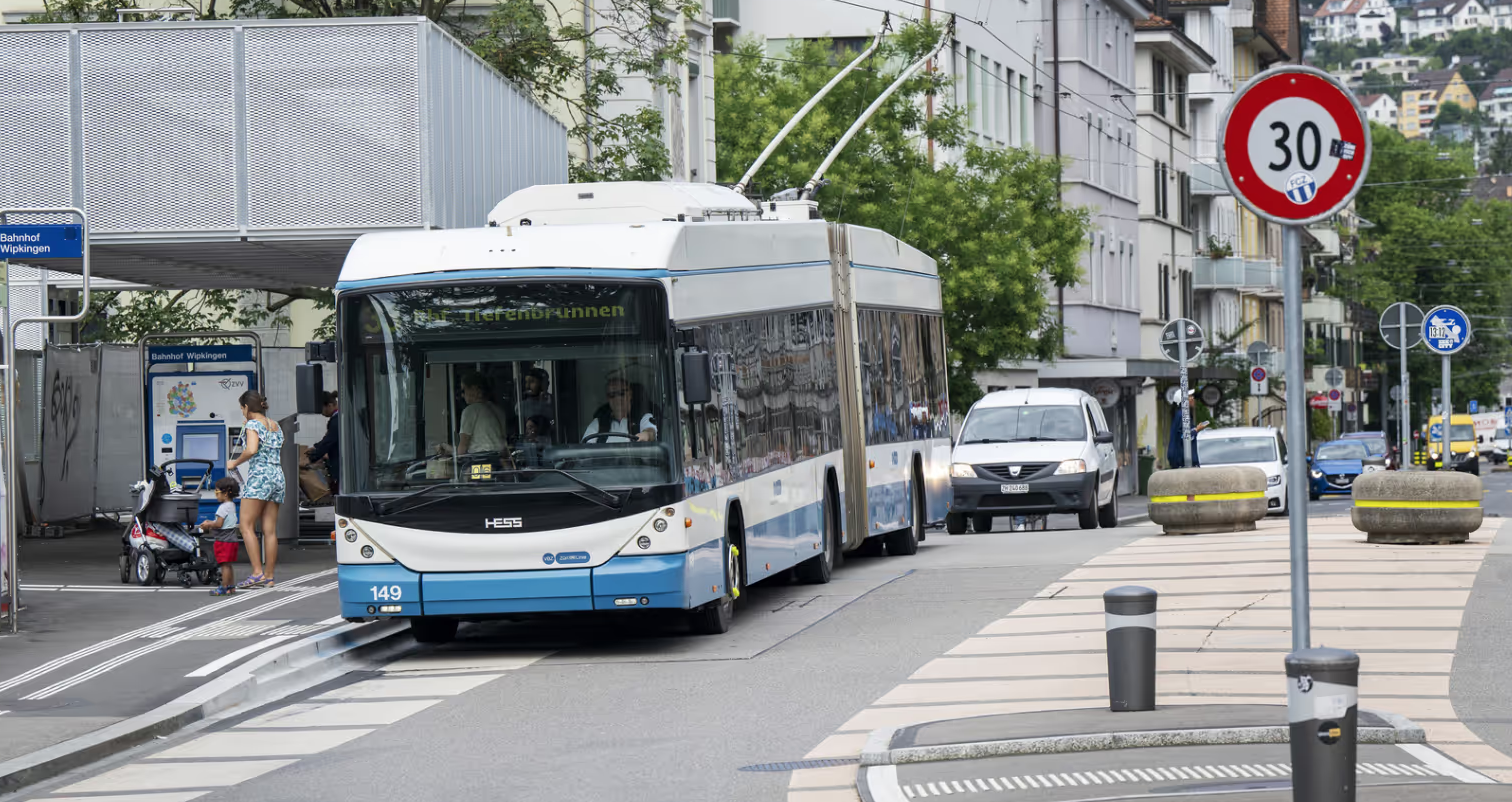
According to Swiss media reporting and statements from VBZ, the decision follows ongoing technical issues. Deliveries from Hess have reportedly slipped by several months, while vehicles in service have experienced recurring faults in heating, ventilation, and climate control (HVAC) systems.
MAN’s electric buses have also faced scrutiny regarding door mechanisms and thermal systems. VBZ indicated that while both suppliers were granted time to resolve these issues, the authority ultimately concluded that the measures failed to deliver a “durable improvement” in reliability.
Manufacturer responses
The manufacturers have responded by framing these challenges as part of a broader industrial transition.
Hess AG, which has supplied over 100 buses to Zurich over two decades, acknowledged the complexity of the current generation of vehicles. In public statements regarding the evolution of their fleet, the company noted: “Battery-electric vehicles rely on tightly integrated systems spanning power electronics, software, thermal management, and charging interfaces … further optimization measures are underway.”

Meanwhile, MAN Truck & Bus has maintained a focus on its long-term competitiveness. While not commenting on the specifics of the Zurich tender reset, MAN CEO Alexander Vlaskamp recently emphasized the company’s commitment to its electric roadmap through the “MAN2030+” program: “The plan secures MAN’s competitiveness and guarantees our customers a broad product portfolio as a full liner, which forms the basis for the company’s future success … we are fulfilling our industrial policy responsibilities.”
More players …
By resetting the procurement process, VBZ has removed the “home-field advantage” previously enjoyed by local suppliers. Industry analysts expect the March 17 deadline to attract serious bids from global leaders, particularly Chinese manufacturers such as BYD and Yutong.
BYD already has a strong foothold in the Nordics and Benelux regions (recently securing massive orders in Oslo and Flanders). They are positioning themselves as the “reliability” alternative, citing thousands of units in operation compared to the smaller, more experimental batches from European rivals.
Starting this 2026, Yutong has been aggressively marketing its “U-series” city buses specifically for the European market, emphasizing their thermal management systems—the exact area where VBZ’s current fleet failed.
Then there is VinBus, a subsidiary of VinGroup and sister company to VinFast. According to sources inside the company, they are ready to submit their offers and had already seen the opening bringing in their coaches that can easily be built fo VBZ specs.
At BusWorld last year, Cleantechnica already reported on the interest of these two Chinese bus makers to come into the market. Having already secured major contracts in cities like Oslo and Brussels, both companies are positioning themselves as the “reliable” choice for transit authorities weary of the technical “growing pains” associated with smaller European production runs.
This shift is highlighted by the recent success of Solaris Bus & Coach, which recently signed a framework agreement with PostAuto for up to 115 battery-electric buses to be deployed across multiple Swiss cities between 2026 and 2027. Solaris’s ability to demonstrate high fleet availability at scale has positioned it as a formidable challenger to traditional domestic suppliers.
For VBZ, the priority has shifted from supporting local industry to ensuring that Zurich’s transit spine remains operational regardless of where the buses are built.
… Better service?
For the European market, VBZ’s reset sends a blunt signal: delivery delays and unresolved reliability issues are no longer being tolerated as “growing pains.” As electrification moves from a pilot phase to backbone infrastructure, operators are increasingly willing to widen the competitive field.
The outcome of the Zurich tender, expected following the March deadline, will be a bellwether for whether legacy manufacturers can stabilize their platforms or if the market will continue to shift toward mass-scale integrators.
Support CleanTechnica via Kickstarter

Sign up for CleanTechnica’s Weekly Substack for Zach and Scott’s in-depth analyses and high level summaries, sign up for our daily newsletter, and follow us on Google News!
Have a tip for CleanTechnica? Want to advertise? Want to suggest a guest for our CleanTech Talk podcast? Contact us here.
Sign up for our daily newsletter for 15 new cleantech stories a day. Or sign up for our weekly one on top stories of the week if daily is too frequent.
CleanTechnica uses affiliate links. See our policy here.
CleanTechnica’s Comment Policy