
A Tour of the Jackery Energy Storage Factory & Product Testing Lab — CleanTechnica Field Trip


Support CleanTechnica’s work through a Substack subscription or on Stripe.
Jackery’s rugged products have been pushing out power to keep our outdoor adventures moving for years, so we were excited to get a look behind the proverbial curtain at its energy storage production lines.
Disclaimer: the author’s travel and accommodations were paid for by iMpact PR as part of a tour of companies they work with in China.
A 20 minute drive from their Shenzhen Headquarters, we were dropped off in front of an unassuming industrial complex. A uniformed employee came out and escorted us through a labyrinth of buildings before we started to see pops of Jackery’s signature orange.
All the factory workers wear special jackets, hats, and booties to keep the working area clean and to minimize static electricity buildup. These aren’t available in the Jackery store (yet?), but putting them on definitely makes you feel like you’re getting ready for some serious work.
Factory tour
Walking through the Jackery factory, I was like a kid in a candy store. Manufacturing is an absolutely fascinating process, and that is amplified even further when you’re looking at how products you’ve used for years are put together. It was a fascinating process to see, and understandably they wouldn’t let me take photos due to the proprietary nature of the cells, the circuit boards, and the manufacturing process itself.
Just the same, we were excited to be the only media to get a look inside Jackery’s factory and extensive product testing lab. We started off on one of the many floors of the factory, where Jackery control boards were assembled. The process starts off with a naked board where solder is then printed on and baked onto the circuit board.
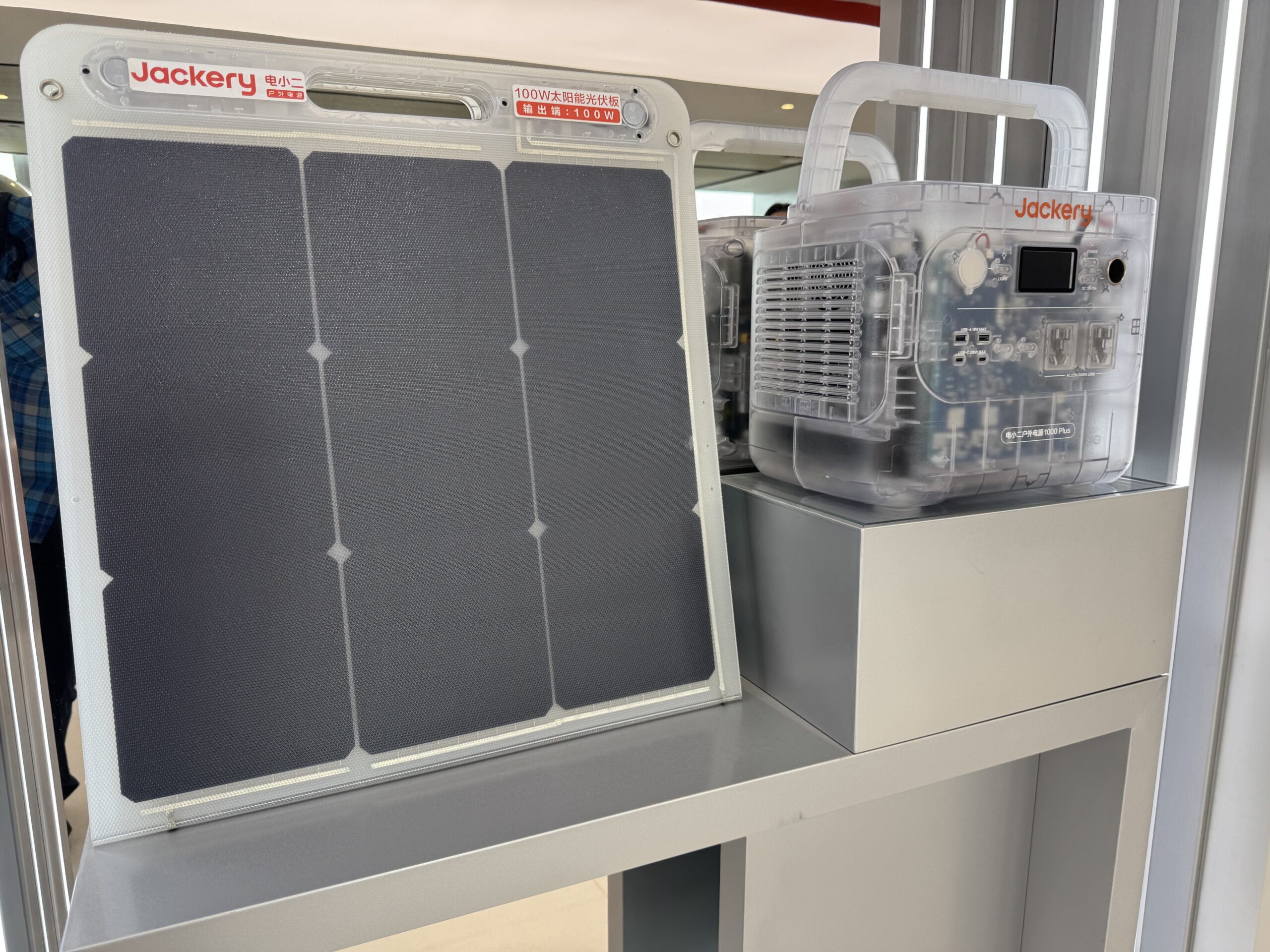
From there, the board was sent to a pick and place machine. All the electrical components came in on rolls staged along the side of the pick and place machine, which as the name implies picks the components off of the rolls and places them where they’re supposed to go on the circuit board. This happens automatically to ensure a high quality product.
With the components in place, the board is moved over to a long oven where the solder is baked again, locking the components in place. At the end of the oven and after the boards cool off, they head to one of the many testing stations along the production line to confirm everything works as expected. Quality testing happens throughout the process and at a much more technical level than I was able to understand through our translator.
Different circuit boards are made for the various functions in the portable power stations being made at this factory. For instance, you have one for the user interface with a screen, buttons, and the plugs that sit at the front of the device.
A different circuit board is created for the battery management system, while another is made with the AC outlets coming out of another power station. These boards are designed to be used for a specific portable power station, with different circuit boards for different units. They all have different power output ratings, capacities, and use cases, so this makes complete sense.
The circuit boards were then inserted into and attached to the case for the portable power station. These came in from a different area, so I’m not sure if they were made onsite or brought in from a supplier. Similarly, the battery modules which were comprised of a wide range of cells, insulation, and wiring were put together in a different area.

The various circuit boards for the display, battery management system, and power outlets were added to the case, followed by the cells. The various components were then all wired together and tested to ensure proper operations.
At the final stage in the assembly line, portable power stations were screwed together before being sent on to testing. In the assembly area, the final quality check was a battery charging station that tested the ability for the power station to accept a charge and discharge power through one of the many outlets.
Product testing lab
From there we moved on to Jackery’s product testing lab, which tested its full range of portable power stations and solar panels for everything from long-duration freezing temperatures to solar panel output testing to putting their heavy portable power stations with wheels on a treadmill to see how long the wheels and handles lasted after many hours of abuse.

It was impressive to see just how many temperature controlled testing chambers they had to test their wide range of products across many different scenarios for hours on end.

It’s one of those things you don’t really appreciate until you’re out in the middle of the Frozen Oregon wilderness in the middle of winter in your electric car with 1% charge, wondering if your portable power station might have enough power to give you a few more miles of range.

For their outdoor products, like their new home energy storage system, the SolarVault 3, they also test its water resistance in a chamber that squirts water at the unit from all directions for hours on end. They also test this with saltwater to test for corrosion resistance, which feels like nails on a chalkboard for an electronic device if you ask me.
Overall
It was exciting to get a look behind the curtain at Jackery’s assembly and product testing labs. It’s things like that that really give you confidence in the products, knowing that they will perform regardless of how hot or cold it gets or how much abuse you throw at them.
One of the highlights of the entire trip to Jackery’s headquarters, manufacturing facility, and product testing lab was ironically the tiny Jackery Explorer 100 Plus. It is just too cute and always catches my attention. I still need to pick one of these up for my desk at home.
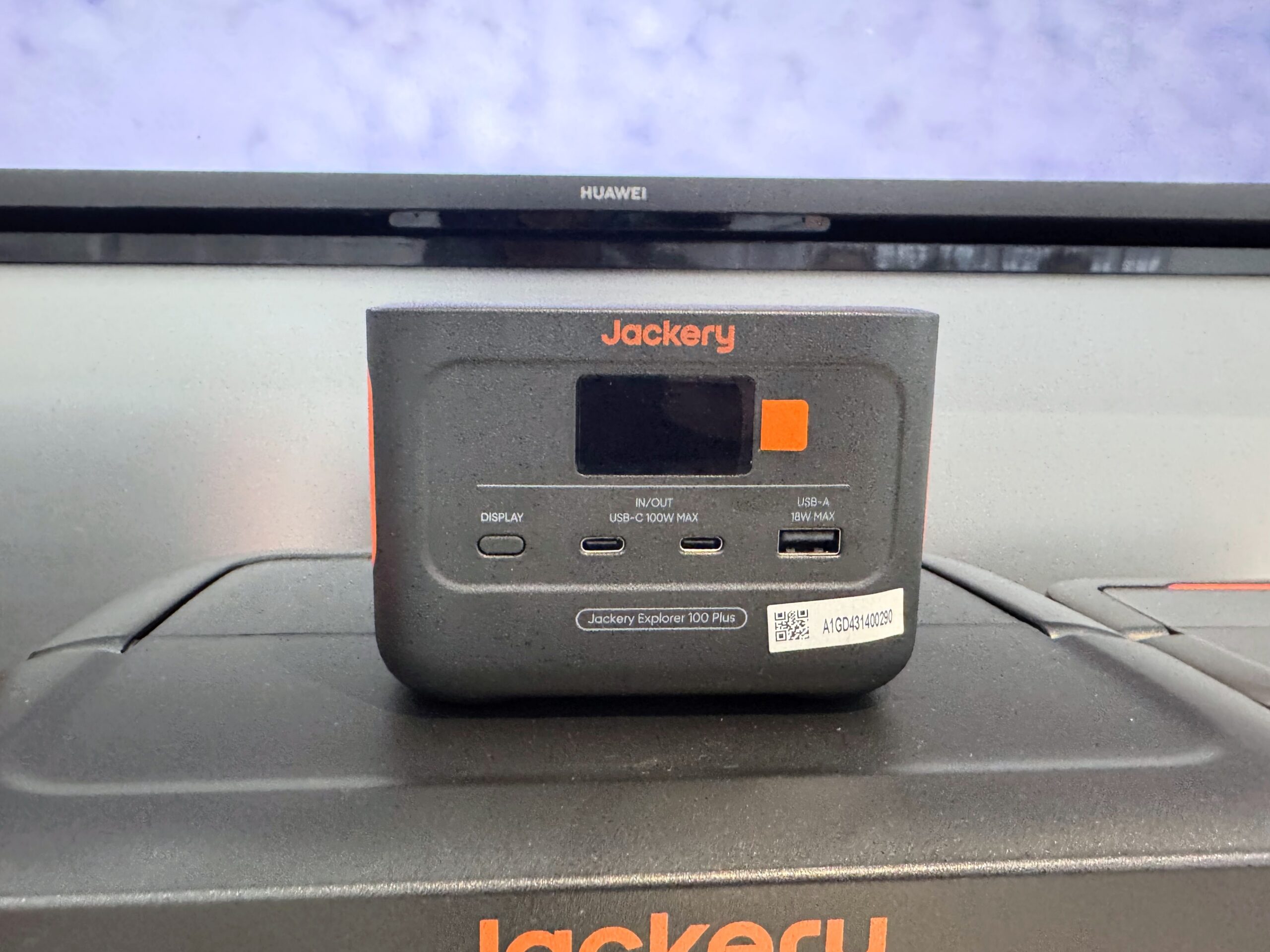
For more information about Jackery, its manufacturing process, or its product testing lab, head over to its official website. You can find more information about all the love the Jackery staff put into their products and the factory and the abuse they throw at their products before shipping them off to customers.
Sign up for CleanTechnica’s Weekly Substack for Zach and Scott’s in-depth analyses and high level summaries, sign up for our daily newsletter, and follow us on Google News!
Have a tip for CleanTechnica? Want to advertise? Want to suggest a guest for our CleanTech Talk podcast? Contact us here.
Sign up for our daily newsletter for 15 new cleantech stories a day. Or sign up for our weekly one on top stories of the week if daily is too frequent.


CleanTechnica uses affiliate links. See our policy here.
CleanTechnica’s Comment Policy