
India’s Copper Industry Sounds Alarm as UAE Imports Surge Under CEPA

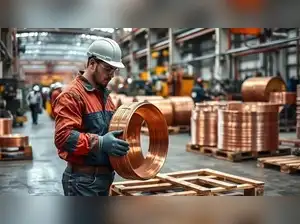
India’s copper industry, long considered a backbone for infrastructure, electrical manufacturing, and renewable energy, is raising red flags over the rising tide of imports from the United Arab Emirates (UAE) under the Comprehensive Economic Partnership Agreement (CEPA). While the landmark free trade pact was designed to boost bilateral commerce and investment, domestic copper producers argue it has tilted the playing field against them, threatening their competitiveness and long-term survival.
Copper’s Strategic Role in India’s Growth
Copper is more than just an industrial metal—it is vital for power generation, transmission, electronics, construction, and electric vehicles. As India pushes forward with ambitious renewable energy targets, infrastructure expansion, and the electric mobility revolution, copper demand is expected to grow significantly. However, domestic producers now fear that the surge in duty-free copper imports from the UAE could undermine local production capacity and discourage fresh investments in the sector.
The CEPA Effect
The India-UAE CEPA, implemented in 2022, eliminated or drastically reduced tariffs on thousands of products, including refined copper and copper products. For the UAE, which has invested heavily in its smelting industry, the agreement opened a lucrative market in India. The result has been a sharp rise in imports of copper cathodes, rods, and other semi-finished products into the Indian market.
While importers and downstream industries may benefit from lower costs, Indian producers see this trend as a warning signal. They argue that the influx of cheaper copper products threatens to displace local output, reduce capacity utilization, and put domestic firms at risk of financial stress. Some stakeholders even allege that the UAE could become a re-export hub for copper sourced from other countries, effectively bypassing duties and further hurting Indian producers.
Industry Concerns
Domestic copper manufacturers stress that they are already operating in a challenging environment, with fluctuating global prices, high input costs, and regulatory hurdles. The added competition from duty-free imports exacerbates these pressures. Industry associations warn that if the trend continues unchecked, India could become overly dependent on imported copper, undermining the government’s vision of self-reliance in critical sectors.
Moreover, with copper being a strategic metal for energy transition technologies—ranging from solar panels and wind turbines to EV charging infrastructure—the ability to maintain a strong domestic copper base is viewed as essential for long-term national security and economic resilience.
Calls for Policy Intervention
In response, the industry is urging the government to revisit aspects of CEPA that directly impact critical metals. Options being suggested include tighter monitoring of imports to prevent circumvention, safeguard duties in case of sudden import surges, and greater support for domestic producers through incentives and infrastructure improvements. Some voices even call for copper to be treated as a “strategic mineral,” ensuring that trade agreements do not jeopardize India’s industrial base.
Balancing Trade and Industry Growth
The issue highlights the broader challenge of balancing the benefits of trade liberalization with the need to protect sensitive domestic industries. While CEPA has delivered a boost to bilateral trade between India and the UAE, its unintended consequences for sectors like copper underscore the importance of carefully calibrating free trade agreements.
Conclusion
India’s copper industry is sounding the alarm not because it fears competition but because it sees a risk to its very survival under the current trade framework. With copper demand set to soar in the coming decades, policymakers face a critical decision: whether to allow market forces under CEPA to dominate or to step in with safeguards that ensure domestic producers can thrive alongside imports. How India responds will determine whether the nation emerges as a global leader in copper-based clean technologies or becomes increasingly dependent on external suppliers in the years ahead.