

Support CleanTechnica’s work through a Substack subscription or on Stripe.
David Hasselhoff fans, prick up your ears! The Chinese EV startup Xpeng Motors is one step closer to marketing a robotaxi that fulfills the vision of Hasselhoff’s souped up, crime fighting Pontiac Trans Am KITT in the hit TV series Knight Rider, combined with all the parental instincts of the self driving, horn tooting 1921 Ford Model T that stole the show in the not-so-hit series My Mother The Car. No, really! Read on…
The XPENG Difference
With other stakeholders in the autonomous vehicle business breathing down its neck, the pressure is on XPENG to produce a robotaxi that out-does all others.
I test-drove a sporty XPENG P7 for a hot minute or two in August of 2020 (yes, that was months before a vaccine was available — how could I resist?) and my question is why would anyone pass up a chance to drive an Xpeng for themselves? That P7 was a sweet ride!
Nevertheless, for anyone who needs a taxi, EVs provide an edge over gasmobiles with a smooth, quiet, zero emission ride. As one of my robotaxi-taking friends sees it, roboticized EVs also offer an extra layer of peace and quiet, being driverless.
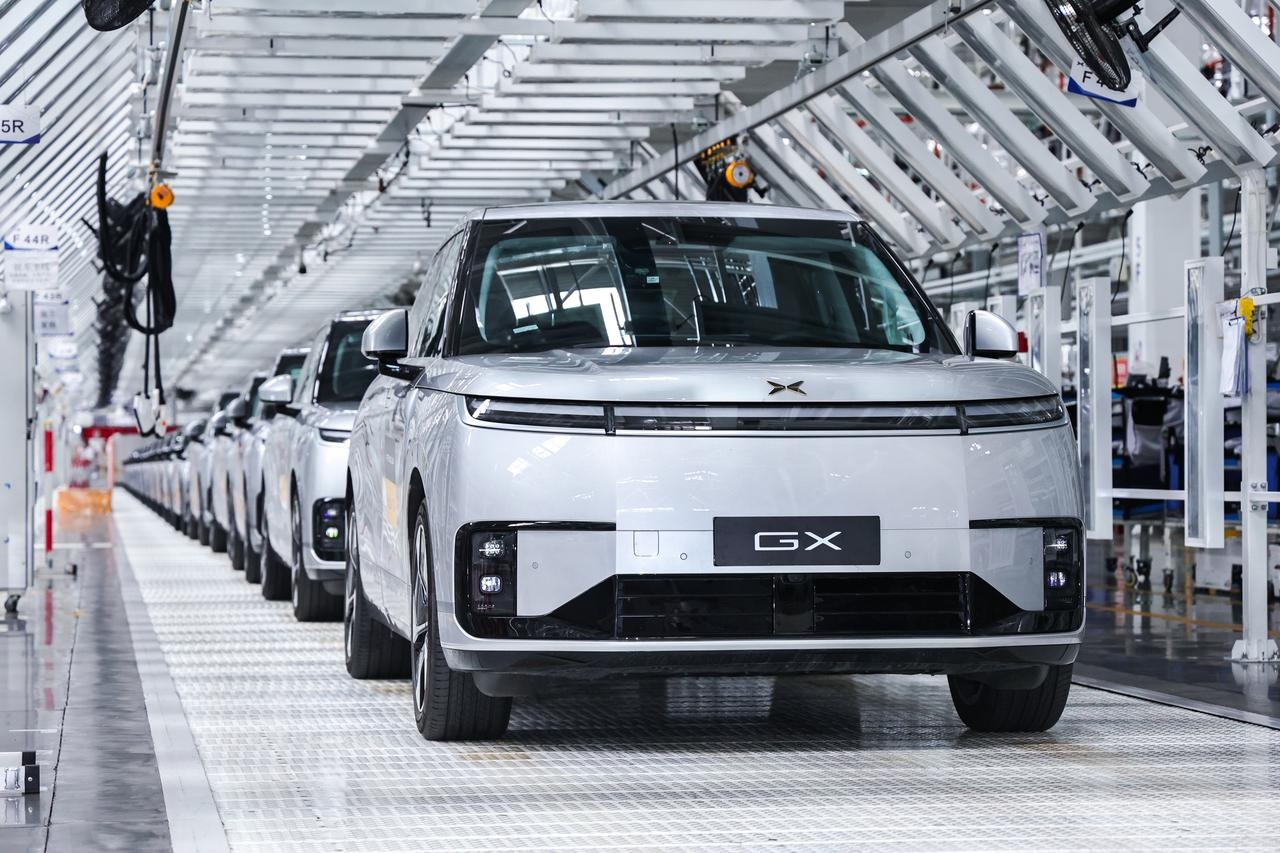
In May of this year, XPENG announced the start of mass production for its new robootaxi, billing it as “China’s first production-ready, pre-assembled Robotaxi model developed entirely with in-house technologies and engineered to L4 autonomous driving standards.”
CleanTechnica editor Zachary Shahan took note of the difference between XPENG and other AV stakeholders in China:
“While there are other robotaxis roaming the roads of China from tech giant Baidu and dedicated robotaxi firms, this is a different thing — it’s a passenger car company producing robotaxis!”
“XPENG isn’t playing around. It’s talking about Level 4 autonomous driving capability. Furthermore, it’s already been testing that on the road,” Shahan added.
This Is Not Your Parent’s Robotaxi
The new XPENG autonomous car is based on the company’s GX platform, with the autonomy end handled by a system that XPENG describes as four self-developed Turing AI chips, which deliver an on-board computing power of 3,000 TOPS.
“As autonomous driving advances from driver assistance to full autonomy, XPENG believes vehicles will increasingly become intelligent robotic platforms capable of perception, reasoning and decision-making,” the company states.
As for fighting crime and dispensing parental advice, that remains to be seen. In the meantime, XPENG is focused on the basic task of organizing a seamless experience around full autonomy.
In the latest news, earlier today XPENG announced that it has begun employee testing, highlighted by XPENG Chairman and CEO He Xiaopeng, who experienced a soup-to-nuts automated ride from the initial placement of an order for pick-up, all the way through to arriving at his destination.
A Global Business Model
XPENG also aims to stand out from the crowd by serving as an enabler of other robotaxi fleets globally, rather than operating its own ride-hailing system. Candice Yuan, Head of XPENG Robotaxi, notes that the company’s second-generation VLA (Vision-Language-Action) model shaves down the cost and complexity of deployment in different environments around the world.
“Leveraging the same technology foundation underpinning both its L2 intelligent driving and L4 autonomous driving systems, XPENG’s Robotaxi platform is designed for rapid deployment across different cities and markets without relying on LIDAR heavy architectures or high-definition maps,” the company emphasizes.
Hold on to your hats. Following employee tests, the next steps include establishing a demonstration routine in Guangzhou later this year, aimed at global replication with the potential for partnerships under exploration in Europe, the Middle East and Southeast Asia.
What About The Tesla Robotaxi?
Yes, what about it? CleanTechnica readers have had plenty to say on the topic of Tesla, robotaxis, and autonomous driving overall.
The most recent note on Tesla’s autonomous car journey came from reader Matthew2312, in response to an update on one of Tesla’s robotaxi competitors here in the US, the Amazon-backed startup Zoox. Here’s the opening lines from Matthew2312 (break added for readability).
“Tesla is arguing that all autonomy requires is a middling computational stack like HW4 plus a handful of middling resolution cameras, and good software. If it is right, there are already millions of vehicles on the road with significantly more capable hardware than what Tesla has fielded. (My gen 2 R1S with 11 mp cameras and dual Orin processors plus 360 radar is a fine and not particularly special example.)
Once Tesla proves it can be done, the race will be on to replicate the Tesla software on existing hardware. It is like the Wright Brothers, Kitty Hawk did not build a “moat,” it opened the competitive floodgates.
You can find the rest of Matthew 2312’s take here.
Coincidentally or not, Matthew 23:12 is also an oft-cited sentence from the Christian Bible, often rendered as“For those who exalt themselves will be humbled, and those who humble themselves will be exalted.” That’s not necessarily a troll upon the world’s richest and least humble man in the autonomous vehicle field. Just saying.
NHTSA To Robotaxis: Safety First!
Humility aside, another issue surfacing for Tesla, and all autonomous vehicle stakeholders in the US, involves the unfortunate habit of interfering with law enforcement and first responders.
As a crime fighter, KITT would not approve. Neither does the National Highway Traffic Safety Administration. On July 8, NHTSA Administrator Jonathan Morrison issued a blunt letter to unnamed Automated Driving System Developers, calling attention to instances in which driverless cars “drove directly into active emergency scenes, blocked the paths of ambulances and firefighters, or failed to recognize and respond to basic safety conditions like flashing lights, flares, smoke, fire, and traffic cones.”
“Let me be clear: the inability to detect and appropriately respond to such situations represents a functional insufficiency,” Morrison added. Keep an ear open for further developments, as Morrison also notified his list of AV developers that he expects another round of meetings on the topic of first responders later this month.
In the meantime, the beat goes on. Tesla robotaxis have been surfacing in a growing number of US cities, Miami, Florida being among the latest.
Elsewhere around the US, some lawmakers are dtaking a more hands-on approach. In New Jersey, for example, a bill circulating in the state Senate calls for the state’s Motor Vehicle Commission and the Department of Transportation to establish a three-year pilot program for testing autonomous vehicles, including trucks and robotaxis among other vehicles.
The bill stipulates that the MVC administrator can promptly halt the operation of an AV upon a determination of a “risk to public safety,” as defined within the bill. If the bill passes into law, don’t hold your breath for the outcome. As written, the bill allows for a six-month window before the MVC and DOT issued their recommendations, with the clock starting at the end of the three-year pilot period.
Tesla fans, beware. Road & Track points out that the legislation also calls for AVs to use lidar, radar, or other sensor-based technology in addition to cameras, leading to the potential for an outright ban on Tesla AVs on state highways.
Photo: The Chinese startup XPENG is moving forward with plans for a new electric robotaxi aimed at the global market for seamless, fully autonomous ride hailing experiences (courtesy of XPENG via CleanTechnica archive).
Sign up for CleanTechnica’s Weekly Substack for Zach and Scott’s in-depth analyses and high level summaries, sign up for our daily newsletter, and follow us on Google News!
Have a tip for CleanTechnica? Want to advertise? Want to suggest a guest for our CleanTech Talk podcast? Contact us here.
Sign up for our daily newsletter for 15 new cleantech stories a day. Or sign up for our weekly one on top stories of the week if daily is too frequent.

CleanTechnica uses affiliate links. See our policy here.
CleanTechnica’s Comment Policy