

Support CleanTechnica’s work through a Substack subscription or on Stripe.
Note: This article has been sitting in the CleanTechnica CMS since February. Producing it required conversations across multiple sectors, but a recent visit to VinFast’s manufacturing complex in Hai Phong reinforced a conclusion I have long held. The company’s differentiator is not technology alone. It is the people behind it. Conversations with workers, engineers and managers across the press shop, body shop and final assembly lines — often conducted through Google Translate — revealed a culture that may ultimately prove as important as any platform, battery or production process.
This analysis is based on publicly available data, company disclosures, industry trends and informed assumptions. It is intended as a strategic assessment and should not be used as the basis for investment decisions or stock trading.
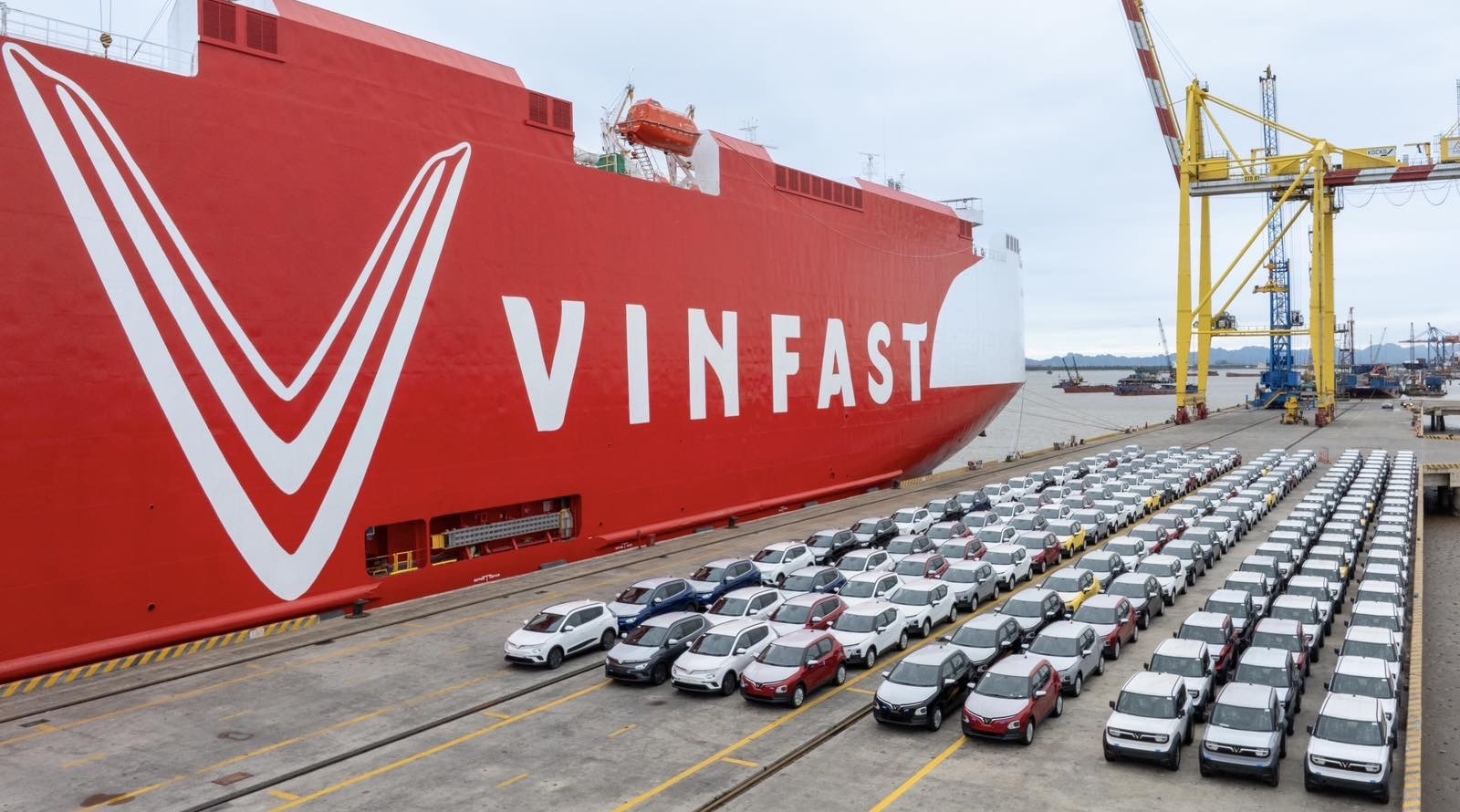
The simplest way to understand VinFast’s target of 300,000 vehicle sales in 2026 is to divide the goal into two markets: Vietnam and the rest of the world. My recent visit to the company’s manufacturing complex in Vietnam only reinforced that reality.
At the Vingroup Annual General Meeting in Hanoi earlier this year, Vingroup Chairman Pham Nhat Vuong suggested that roughly 200,000 units could come from the domestic market. If that assumption holds, VinFast will need to generate approximately 100,000 sales outside Vietnam.
A reasonable allocation of those international sales begins with Indonesia and India, which together could account for nearly two-thirds of the overseas total. Indonesia may contribute between 30,000 and 35,000 units, supported by VinFast’s new assembly plant in Subang, local EV incentives, and partnerships with transportation operators. The facility not only provides local manufacturing capacity for right-hand-drive vehicles but also positions Indonesia as a regional production hub serving much of Southeast Asia.
India could deliver another 25,000 to 30,000 units as VinFast advances local production plans in Tamil Nadu and expands its retail presence. More importantly, the company appears to be targeting commercial operators, tourism fleets, and mobility providers rather than relying solely on private buyers. Institutional demand could become a major source of volume if those efforts gain traction.
Beyond Indonesia and India, a second tier of markets could collectively contribute around 20,000 units. The Philippines may emerge as one of the more significant contributors through transport modernization programs, Green SM operations, and partnerships with transport cooperatives and fleet operators. This strategy gives VinFast access to a business-to-business channel that is less dependent on consumer adoption while increasing the brand’s visibility in daily public transport.
The Middle East, particularly the United Arab Emirates, could provide a smaller but strategically valuable source of sales. Although volumes are unlikely to match Southeast Asia, stronger pricing and growing interest in electric vehicles could make the region an important contributor to revenue and profitability.
Thailand and Malaysia are likely to remain more challenging. Both markets are highly competitive, with established domestic players and strong Chinese EV participation. In Malaysia, fuel subsidies continue to reduce the economic incentive for electrification, while Thailand’s crowded market makes rapid expansion difficult. In both countries, fleet and commercial customers may represent a more practical path than mass-market retail sales.
The remaining volume could come from smaller ASEAN and emerging markets where VinFast continues to expand its distribution footprint. Singapore, despite its restrictive vehicle ownership environment, may also provide a modest contribution as the brand establishes a presence there.
That leaves North America and Europe. For now, these regions appear more important for maintaining global visibility than generating significant volume. The delayed North Carolina manufacturing project and the shift toward a dealer-based sales model suggest a strategy focused on sustaining market presence while controlling costs. Deliveries in these markets remain valuable for credibility, but they are unlikely to be central to achieving the 300,000-unit target.
If Vuong’s implied split of 200,000 domestic units and 100,000 international units proves accurate, VinFast’s success will depend on the brand recognition brought about by fleet partnerships, local assembly operations, and mobility services across emerging markets. That is what will bring showroom traffic. The road to 300,000 vehicles increasingly resembles an ecosystem expansion strategy rather than a conventional automotive sales campaign.
Sign up for CleanTechnica’s Weekly Substack for Zach and Scott’s in-depth analyses and high level summaries, sign up for our daily newsletter, and follow us on Google News!
Have a tip for CleanTechnica? Want to advertise? Want to suggest a guest for our CleanTech Talk podcast? Contact us here.
Sign up for our daily newsletter for 15 new cleantech stories a day. Or sign up for our weekly one on top stories of the week if daily is too frequent.

CleanTechnica uses affiliate links. See our policy here.
CleanTechnica’s Comment Policy