

Support CleanTechnica’s work through a Substack subscription or on Stripe.
In a filing with the SEC last week, SpaceX said it plans to raise $75 billion from new investors in its first sale of shares to the public. If successful, the IPO would value the company at approximately $1.75 trillion and put Elon Musk on a path to becoming the first trillionaire in history.
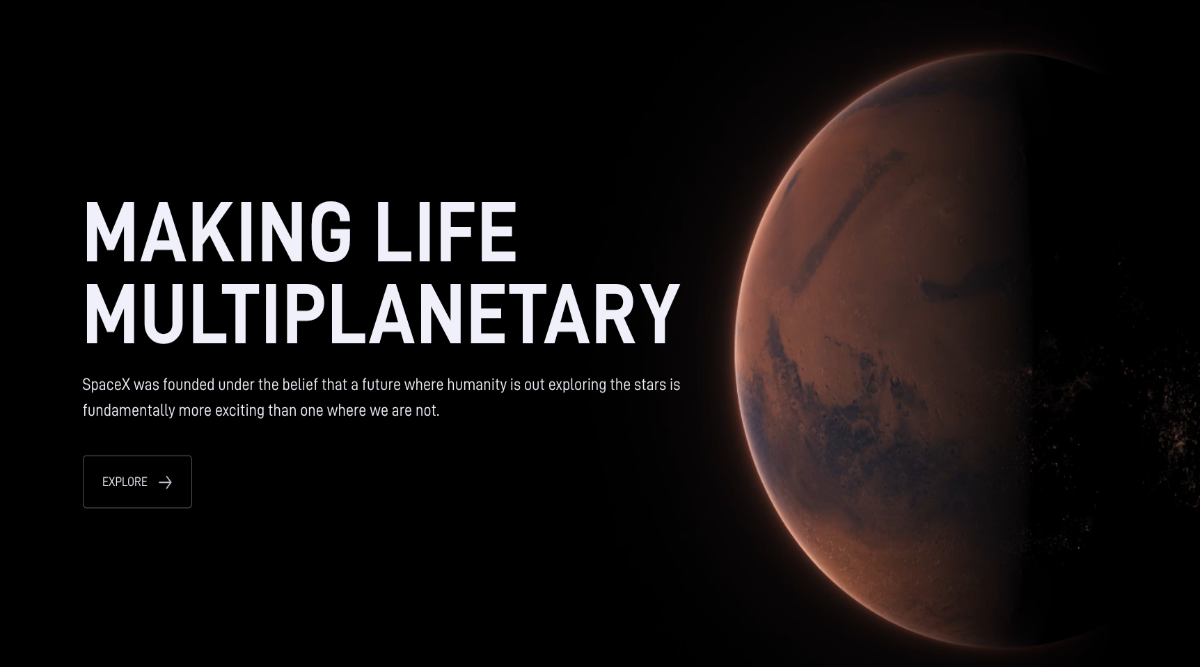
According to DW, Musk wants SpaceX to do more than just send astronauts into space. He plans to build the infrastructure to secure the future of human life beyond Earth. The ultimate goal is to create self-sustaining cities on Mars that could be home to up to one million people. To make that happen, SpaceX wants to utilize the natural resources found on the moon and on asteroids to support multi-planetary exploration.
Because those celestial bodies have little or no gravity, it is much easier and cheaper to land on them to extract materials. The moon is a critical part of those plans because factories and fuel depots could be constructed there at much lower cost than lifting the raw materials needed into orbit from the Earth.
A CEO Who Can’t Be Fired
Part of the plan is also to build massive data centers in space, where they can be powered by abundant sunlight and cooled by the low temperatures found in space. In fact, Tesla is planning a new factory in Texas capable of producing 100 GW of solar panels. Supporters are cheering the news, thinking all those solar panels are intended to produce electricity here on Earth, but in fact it appears Musk plans to use them primarily to power his space-based data centers.
This is all heady stuff, and it’s not hard to imagine investors pushing and shoving to buy some of the initial SpaceX shares, expecting them to quadruple — or more — in value over time. That could happen, but there are a few things careful investors should know before they place their orders.
DW points out that Musk currently owns about 42 percent of SpaceX. At the targeted $1.75 trillion valuation, his stake alone would be worth roughly $735 billion. But if you read the S-1 document filed with the SEC, you will find that Musk has structured things so there will be two classes of investors — him and his cronies in one class, and everyone else in another. That arrangement will give Musk total control over the company in much the same way as he has total control over Tesla.
This arrangement “effectively makes him unfireable as CEO, helping him to pursue long term, high risk projects without pressure from short term investors or activist shareholders,” DW wrote. In other words, he will be a dictator, answerable to no one or nothing other than his own conscience. Readers are free to form their own opinion about that.
On The Inside Looking Out
The IPO may or may not benefit new shareholders, but it will do wonders for company insiders. According to the Financial Times, SpaceX president Gwynne Shotwell and CFO Bret Johnsen would see their shares exceed $1 billion in value. Longtime investor Antonio Gracias could benefit to the tune of $70 billion, while PayPal co-founder Luke Nosek’s stake would be worth around $5 billion. If you are keeping track, the $75 billion the IPO is expected to raise would primarily benefit 4 people besides Musk. Nice work if you can get it.
“This would mark a huge leap of faith by investors as SpaceX remains deeply unprofitable, reporting a $4.94 billion net loss in 2025 due to heavy investments in Starship, satellite deployment, and AI resources,” DW said. Due to the enormous hazards of operating extraterrestrially, along with fast-advancing AI, the IPO filing lays out the very real dangers SpaceX faces. These include “a unique range of space-related risks,” including “radiation from solar and cosmic sources; micro-meteoroids, and orbital debris,” and “human injury or death.”
“We have a history of net losses and may not achieve profitability in the future,” the S-1 filing also warns.
“The sky high valuation has some analysts wondering whether SpaceX’s ambitions are more pie-in-the-sky than rocket science — a debate that will only intensify once trading begins on NASDAQ next month,” DW wrote.
A Cosmic Dandelion Seed
James Thomason, who claims to have 25 years experience evaluating Silicon Valley financial machinations, wrote in a recent blog post: “SpaceX is a cosmic dandelion seed engineered to carry humanity’s future across the vastness of space. But beneath the breathless, soaring poetry of human expansion, the [S-1] filing reveals the company’s true, grinding primary mission of bailing out the smoldering, cash-incinerating disasters of X (formerly Twitter) and xAI. By surgically grafting these ventures into its corporate belly, SpaceX is politely asking the public market to foot the bill for a staggering $20 billion debt bailout, multi-billion dollar operating losses, and a few ridiculously lucrative exits for private insiders.”
Thomason pointed out that the company took out a $20 billion bridge loan in March 2026, just two months before the IPO filing. “It’s a bridge built out of public money and designed to carry the bloated carcass of X and xAI out of the private markets. According to the S-1, the proceeds were immediately used to extinguish the toxic, high-interest debt dragging down those acquisitions, including 12.5% senior secured notes and expensive floating rate term loans.
“To put this old debt out of its misery, SpaceX swallowed a brutal $1.5 billion in debt extinguishment losses in the first quarter of 2026. And the best part? SpaceX will use the IPO proceeds to repay this exact $20 billion bridge loan. While the public is asked to buy the debt, insiders are already putting on their parachutes. The S-1 outlines a series of pre-IPO shenanigans heavily favoring existing royalty,” he wrote.
A Long List Of Concerns
Thomason identifies those shenanigans as follows:
- In the first quarter of 2026, SpaceX spent $2.41 billion repurchasing stock from xAI employees.
- In that same quarter, another $1.93 billion was spent to cash out existing shareholders at fair market value.
- SpaceX is currently carrying $7.92 billion in toxic, long term related third party debt disguised as a failed sale and leaseback arrangement with board member Antonio J. Gracias’s firm, Valor Equity Partners.
- Tesla pushed a $2 billion investment into xAI in January 2026, which miraculously transformed into 19 million split-adjusted shares of SpaceX Class A stock right before the IPO curtain goes up.
- Then there is the newly formed “AI segment.” Born from the February 2026 merger of xAI and X into SpaceX, the new AI division bled out $6.35 billion in 2025 operating losses in 2025, and another $2.46 billion in just the first three months of 2026.
- X’s advertising revenue went from $2.32 billion in 2023 to $1.84 billion in 2025.
- To keep the artificial intelligence section alive, SpaceX poured $12.7 billion into AI capital expenditures in 2025.
- It then added another $7.7 billion in the first quarter of 2026.
SpaceX has just entered into an option agreement to acquire AI coding company Cursor at an implied valuation of $60 billion. “If the newly public SpaceX decides to wake up and walk away from this objectively terrible acquisition, it is still on the hook for a $1.5 billion termination fee and an $8.5 billion deferred services fee. That is a $10 billion penalty payable by SpaceX shareholders to Cursor’s venture capitalists just for saying no.”
A Bailout For Musk?
Obviously, Thomason sees the SpaceX IPO as less of a good deal for new investors and more of a bailout for Musk and his cronies. He claims the IPO investors will be paying “3 to 4 times the demonstrably de-risked asset value for the portfolio of options. Each of those options has meaningful probability of failure or delay.” Only the space and connectivity sectors at SpaceX “are genuine, profit making opportunities,” he says.
“Unfortunately, the ticket you are buying in SPCX isn’t for Mars. It’s the itemized receipt for Elon’s mistakes back here on earth. At $1.75 trillion, it is the most exquisitely engineered, stainless-steel bag in human history. You’ll buy it anyway,” he adds.
Without question, plenty of folks will pile into SPCX stock as soon as it is offered and many of them will be buying because they have faith in the vision of Elon Musk. That faith is what has been keeping TSLA stock afloat for more than a decade, but the risks now are bigger and the potential downside greater.
As the backlash against AI continues to grow, we are reminded of the words of economist Robert Shiller, who said a bubble is “a natural Ponzi scheme. It’s something where you get in and you make money because other people get in, and people keep on coming in because everybody before them made money. But in the end, it’s a game where the money isn’t really there. It all depends on fresh crops of suckers coming in. And at some point you run out of suckers.” The bottom line is the same as it always is: Caveat Emptor!
Sign up for CleanTechnica’s Weekly Substack for Zach and Scott’s in-depth analyses and high level summaries, sign up for our daily newsletter, and follow us on Google News!
Have a tip for CleanTechnica? Want to advertise? Want to suggest a guest for our CleanTech Talk podcast? Contact us here.
Sign up for our daily newsletter for 15 new cleantech stories a day. Or sign up for our weekly one on top stories of the week if daily is too frequent.
CleanTechnica uses affiliate links. See our policy here.
CleanTechnica’s Comment Policy