


Support CleanTechnica’s work through a Substack subscription, on Patreon, or on Stripe. Help us produce all of the high-quality, original content we publish week after week despite the challenges of content-scraping AI, antisocial media, inflation, and other hurdles.
Jackery has been one of the leaders in portable power stations since the early days, emerging as a key provider of emergency power, portable power for all your adventures, and the concept of solar generators.
Disclaimer: Jackery provided the H1000 v2 to the author for the purposes of this review.
It has been a few years since we played with some of Jackery’s units, and since we just visited their global headquarters in Shenzhen, China, and their factory, it felt like a good time to test their latest generation of portable power stations. They sent us the Jackery HomePower H1000 v2, a 1 kilowatt-hour (kWh) battery pack that feels even more compact and lightweight than we remember from the previous versions.
Their latest line of products come in a few different colorways, which is a nice change. We opted for their new white colorway, but they also offer the HomePower H1000 v2 in an off-white Dune color that feels more willing to get dirty when it’s time to head out on your next adventure.
Battery Chemistry
That trend makes sense, as battery cells and the chemistries that keep them cranking continue to get more efficient across the board with each passing year. The big evolution with battery cells over the last few years was the move from the prolific nickel-manganese-cobalt (NMC) chemistry to lithium-ferro-phosphate (LFP) cells.
LFP cells were actually less dense and heavier than their NMC counterparts, but they boasted a 20+ year cell life compared to 10 years ago for even the best NMC cells. Perhaps more importantly, LFP cells are also thermally stable, meaning they won’t generate endless heat and potentially even a fire in the event of an internal short or cell damage.
A Look at the Specs
The Jackery HomePower H1000 v2 is a compact 1 kWh unit, tipping the scales at 23.4 pounds/10.6 kg. That’s just under the 25 lb per kilowatt-hour standard the industry had settled on and won’t break any records by itself.
It’s still an impressive spec considering Jackery’s move to an LFP chemistry. Specifically, they are using LiFePo4 cells in the HomePower H1000 v2. LFP cells are typically less dense than the nickel-manganese-cobalt (NMC) cells that made portable power stations possible, so overcoming that deficiency is an accomplishment. This 1 kWh unit is 12.4 x 7.9 x 9.2 in / 31.4 x 20.1x 23.4 cm, which feels compact, especially with its flush folding handle up top.
On the longevity front, Jackery expects it to still hold a 70% charge after 6,000 cycles. That’s the equivalent of discharging it every day for more than 16 years! Impressive even if the state of charge at that point is only 70%.
Charging it up
When it comes time to charge the unit, you have a few options. Most charging will likely be done through a standard AC wall outlet where it can pull up to 1,600 watts (15 amps at 120V), recharging the unit in around 50 minutes. At home, it’s as simple as plugging it in and letting it charge up. On the road, I found it best to charge the battery off of my truck when fast charging. That lets you drive around without having to keep the inverter on, running all your onboard electric appliances like a fridge or induction cooktop off of the battery, preserving range.
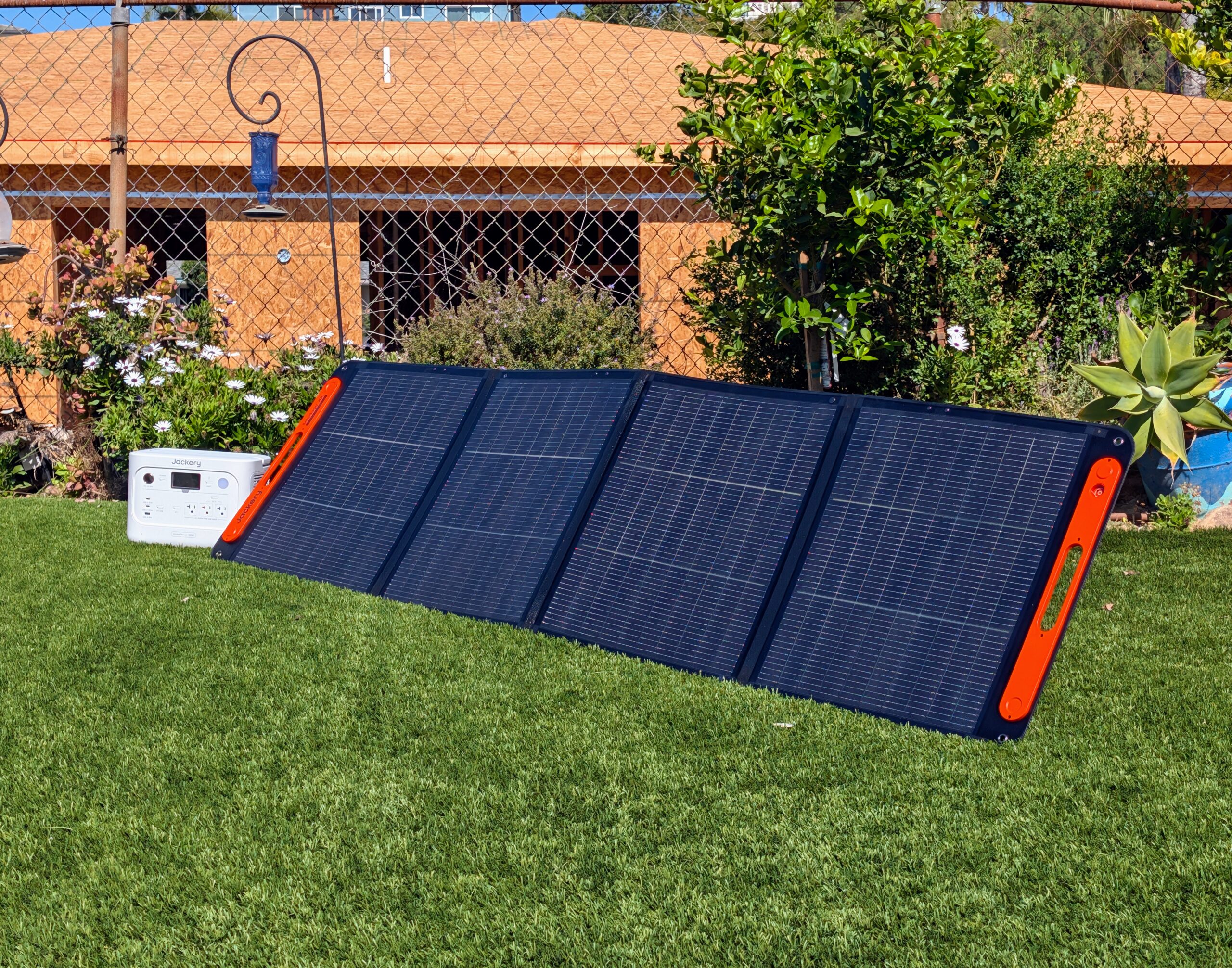
In the event of an outage or when you’re just having fun without a grid connection, you can plug the HomePower H1000 V2 into a pair of Jackery’s 200 watt folding solar panels to recharge the unit in just 3.3 hours. Jackery’s new bifacial solar panels squeeze out every drop of sunshine that hits the front of the panels.
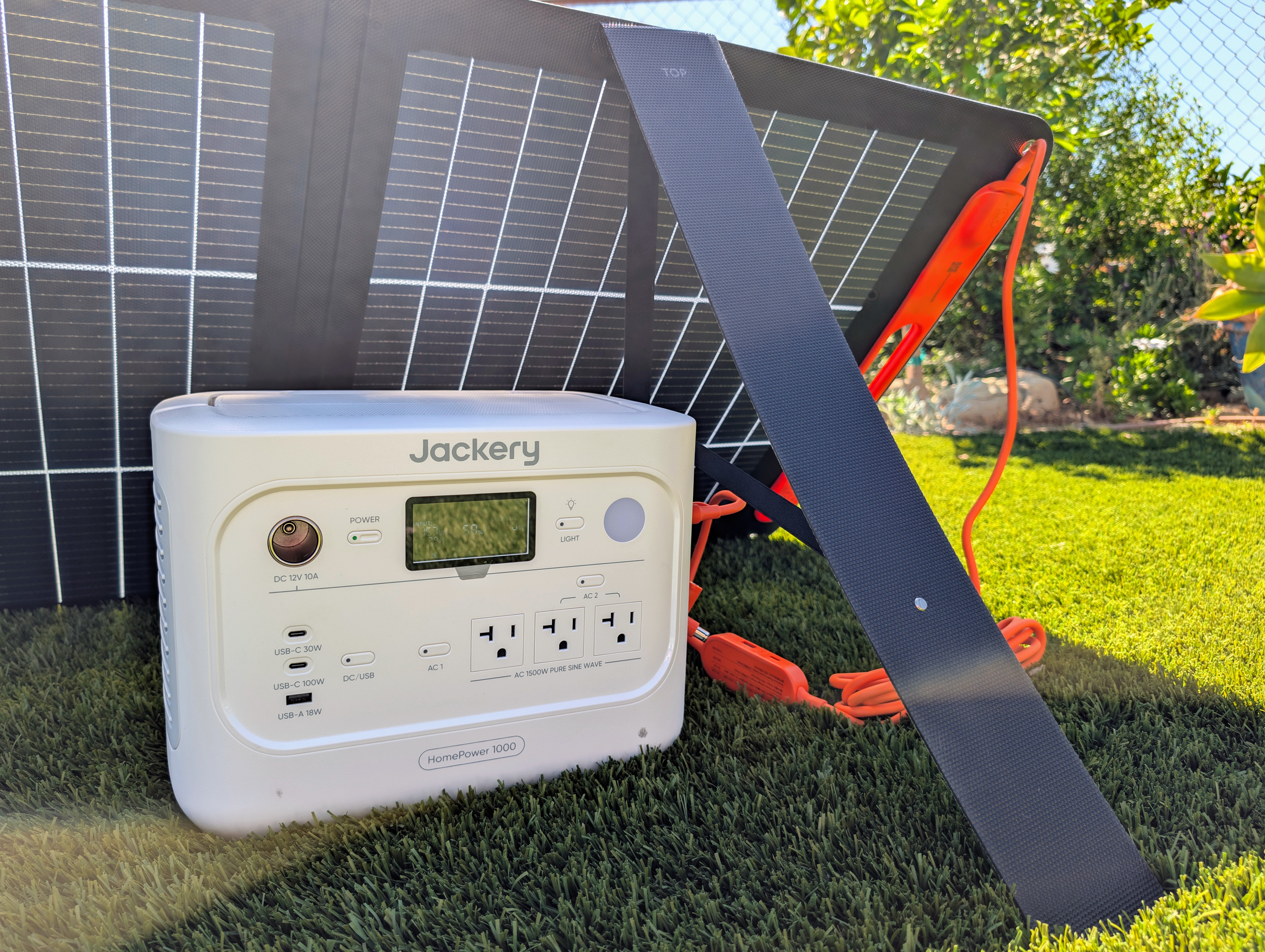
Their bifacial nature also lets them produce solar power from any light that hits the back of the panels. That’s great when charging up on lighter and/or reflective surfaces like a white roof or a sandy beach. That’s the real magic of solar. You just plug in a pair of these static panels that don’t look like they’re doing anything and they make free electricity. It’s like magic, but better.
Using the Power
Many smaller portable power stations fit into a smaller package by shrinking the onboard inverter. That’s a key piece of hardware for owners because it determines how much of the DC power stored in the batteries can be turned into the AC power all their devices actually use.
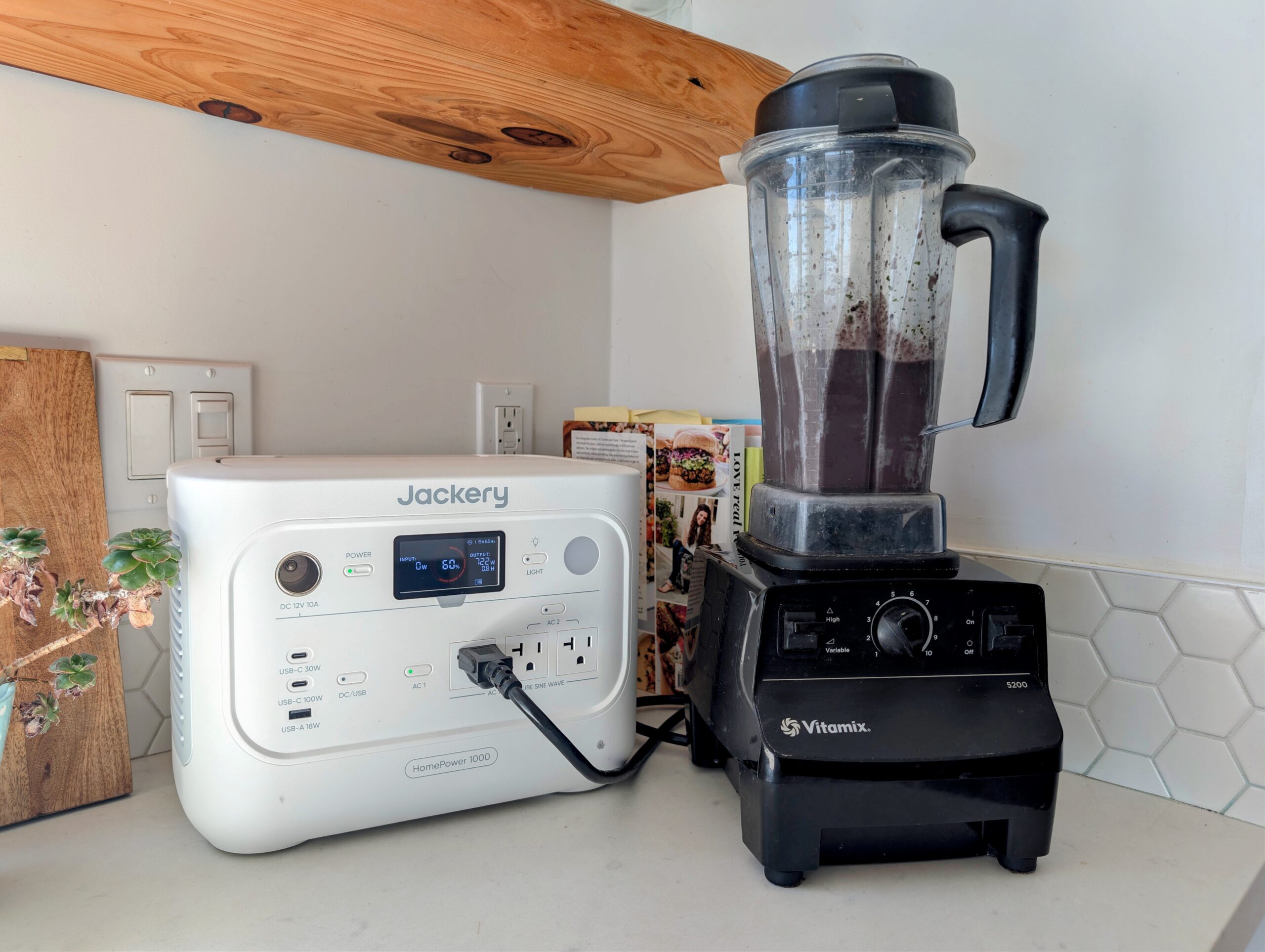
The Jackery HomePower H1000 V2 doesn’t do this and can push out a respectable 1,500 watts of continuous AC power, or up to 3,000 watts peak for short bursts. That’s an impressive amount of power output capability and importantly means it can support many single-burner induction cooktops and other high-power-draw appliances.
To see what the new H1000 V2 was capable of, we topped it up on a full tank of solar goodness and got to work. We plugged in a 1,500 watt heat gun used for heat shrink tubing and loosening up vinyl wraps and cranked it up to full power. Heat guns are purpose-built blow dryers and can really drink power, and this unit was no exception.
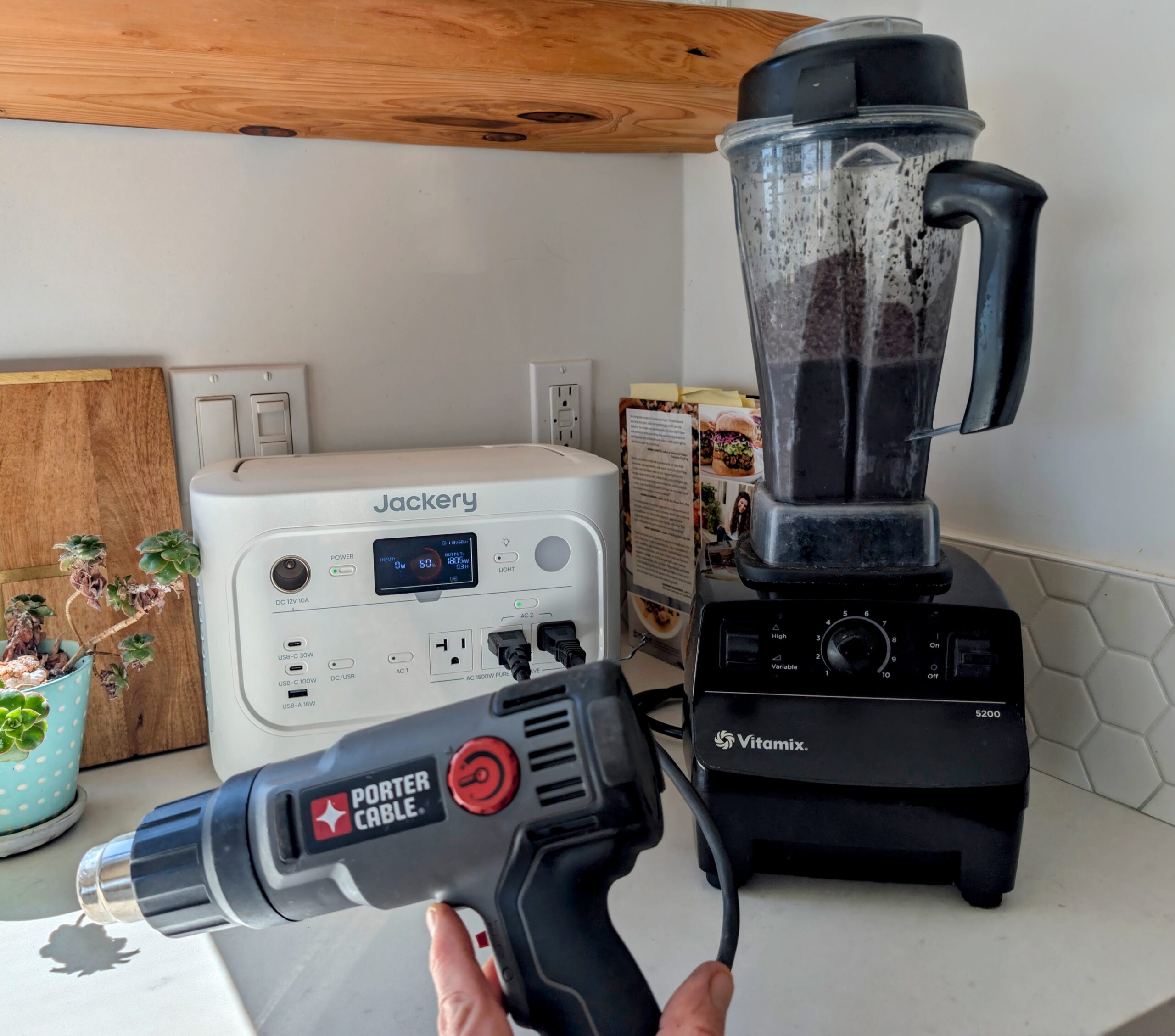
Next we added a Vitamix blender which pulls several hundred watts, pushing the total power draw up over 2,000 watts. We ran the pair for a few seconds, confirming its ability to push out more than its rated 1,500 watts of power for a few seconds. The highest power draw this combination drew in our testing was 2,125 watts, which would exhaust its stored capacity in 28 minutes. It’s exciting to see such a small power station supporting this kind of draw, and while running a blender and a heat gun at the same time probably isn’t in the cards for most people, it’s great to have the extra overhead for device startups, power surges, etc.
Overall
Jackery has been building portable power stations for longer than just about anybody, and the HomePower H1000 version 2 is no exception. It had no issues charging up or keeping a large fridge running for hours, locked in the tonneau of a black truck driving through 100+ degree heat for days on end.
It held up to many charging and discharging cycles as we topped it up at Superchargers, adding drinks and taking out food along the way. On top of that performance and the quality that comes with Jackery’s brand, they have continued to lower the price and improve the quality with each successive generation.
As of this writing, the H1000V2 retails for $879 and is currently on sale for $579. Portable power stations are very competitive, so it’s worth shopping around or waiting for a big holiday sale in your area if you don’t need the unit right away.
For more information about the Jackery H1000 v2, head over to their official website.
Sign up for CleanTechnica’s Weekly Substack for Zach and Scott’s in-depth analyses and high level summaries, sign up for our daily newsletter, and follow us on Google News!
Have a tip for CleanTechnica? Want to advertise? Want to suggest a guest for our CleanTech Talk podcast? Contact us here.
Sign up for our daily newsletter for 15 new cleantech stories a day. Or sign up for our weekly one on top stories of the week if daily is too frequent.


CleanTechnica uses affiliate links. See our policy here.
CleanTechnica’s Comment Policy