

Support CleanTechnica’s work through a Substack subscription or on Stripe.
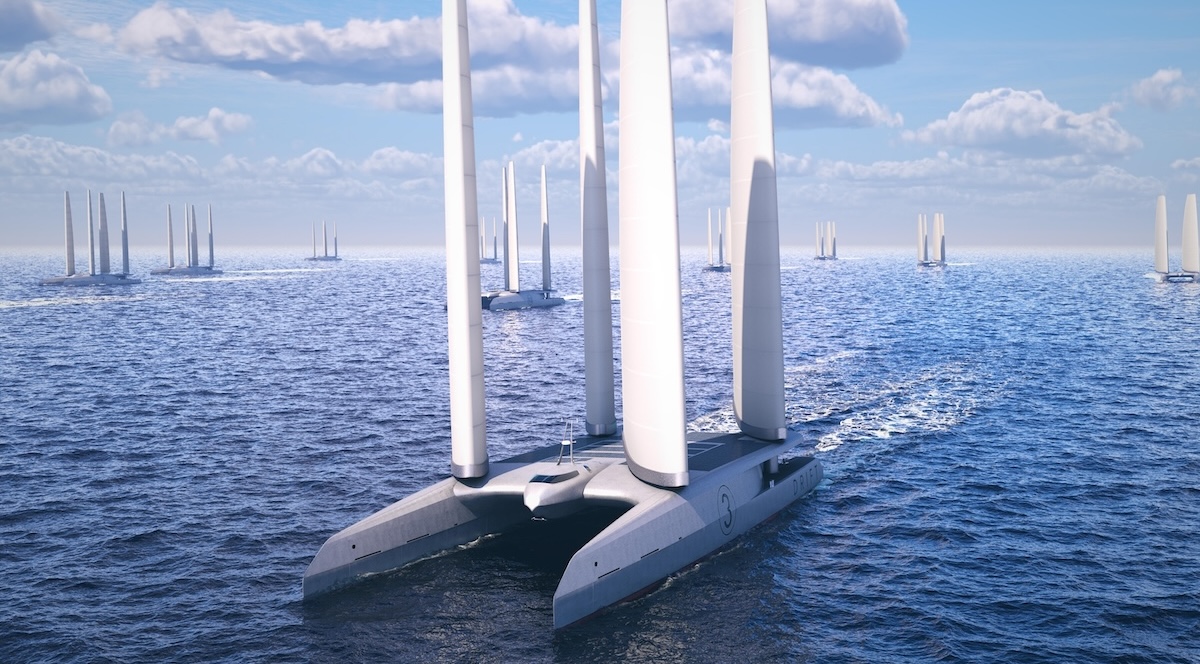
The UK startup DRIFT Energy really wasn’t kidding when they introduced the idea of deploying the wind energy captured by sailboats to run onboard electrolysis systems, with the aim of producing green hydrogen at sea. The concept passed muster with the certification organization RINA earlier this year, and DRIFT has just engaged the firm Commenda Capital Partners to support a 50-vessel program — or more, if all goes according to plan.
The DRIFT Green Hydrogen Plan
DRIFT first sailed across the CleanTechnica radar back in 2024, when the company announced a a £4.65 million round of seed funding for its unique combination of high tech sailing technology with a footprint in the global green hydrogen industry. Taking the lead was the UK venture capital firm Octopus Ventures, a branch of the hyperactive UK startup Octopus Energy through its Octopus Investments branch.
The island and coastal community-centered impact investor Blue Action Accelerator also participated in the seed round, and the UK government lent its seal of approval through its Innovate UK office.
At the time, DRIFT drew attention to its potential for service in the “shadow” vessel fleet that attends to the needs of superyachts at sea, including energy among other systems.
“DRIFT Energy MVY yachts are available as bespoke shadow vessels, enabling a bold owner to achieve true net zero and uniquely become fuel independent,” the company emphasized, referring to its self-appointed moniker, Most Valuable Yachts.
Producing Green Hydrogen At Sea
That depends if and/or when the superyacht industry transitions from traditional maritime fuels into hydrogen fuel cells or hydrogen-fueled engines. In the meantime, DRIFT is now drawing more attention on a wider range of markets including coastal communities and other ports of call that are seeking new ways to navigate around grid bottlenecks and other energy obstacles.
For those of you new to the topic, green hydrogen is an emerging alternative that eliminates gas and coal from the hydrogen supply chain. It can be used in zero emission electric fuel cells, or deployed as a replacement for natural gas in turbines. Biomass and wastewater are also in the running as more sustainable sources, but so far much of the public and private investor interest has landed on electrolysis, in which an electrical current pushes hydrogen gas from water (see more green H2 background here).
Sourcing the electricity from wind turbines, solar panels and other renewable systems completes the green loop. DRIFT aims to optimize offshore wind power by sending its fleet along routes where its proprietary “GOLDILOCKS” system determines that weather conditions are at their peak. As the ships move through the water, they drag underwater generators to run the on-board electrolysis equipment.
The offshore wind angle avoids the down times that can beset onshore wind farms. Offshoring also avoids grid bottlenecks and permitting obstacles that can block land-based electrolysis systems.
A Thumbs-Up From RINA
There being no such thing as a free lunch, pushing the cost of water electrolysis down to a competitive level has been a challenge. However, in island or coastal markets where the price of conventional fuel tends to be high, the cost factor may not be prohibitive.
With the electricity problem solved, another question is how DRIFT aims to supply its ships with water. In years past, seawater straight from the sea was not considered an option because it fouls the electrolysis equipment. Adding a water purification system is one option, though at some expense. Hardier electrolysis systems that can handle plain seawater are also in development.
DRIFT’s website is thin on detail, but the company did receive an Approval in Principle designation earlier this year from the leading Italian naval registry RINA. The designation is a key step towards final approval.
“It is the first time that an AiP has been awarded for an energy-harvesting ship and, through RINA’s risk based Approval in Principle framework, it confirms that DRIFT’s novel design meets safety levels equivalent to established marine industry standards while enabling clean energy generation at sea,” DRIFT noted in a press statement dated May 20.
“Through close technical collaboration with DRIFT Energy, RINA has assessed a novel design that introduces new approaches to the generation and transport of clean energy at sea, while addressing classification and safety requirements from the earliest stages of development,” explained RINA representative Patrizio Di Francesco.
50+ Energy Harvesting Ships
If all goes according to plan, DRIFT will launch its first ship in 2027. In the May announcement, the company also stated that it has more than 30 vessels on order.
The company caught up with CleanTechnica by email earlier this week with an update, in which it described plans for more than 50 vessels under an exclusive capital and project partner framework with the maritime investment firm Commenda Capital Partners.
“DRIFT will continue to lead vessel technology, intellectual property, hydrogen production systems, routing software, project origination and offtake development,” DRIFT explains, noting that Commenda will cover financing and project execution targeting more than $500 million in investments.
Following the launch of the first ship in 2027, Commenda anticipates that an entire flotilla will be ready for deployment in 2029. “As DRIFT Energy progresses from prototype toward commercial deployment, Commenda Capital’s role is to structure the transition from development to scale,” Commenda affirms on its website.
The Fuel Cell Ferries Of The Future Are Coming For Your Fossil Fuels
DRIFT anticipates that its initial area of focus will be seaports. Equipping its ships to refuel other ships at sea will come some time farther in the future.
In the meantime, hydrogen fuel cell systems have been slowly seeping into the maritime industry. Among recent examples to surface is the Japanese firm NYK, which plans to launch a new hydrogen fuel cell dining cruise ship in 2027.
Closer to home, keep an eye on the New York City, where the Finnish firm SWITCH Maritime is following through on plans to introduce a high speed fuel cell ferry. SWITCH has partnered with the shipbuilder Incat Crowther on the project, which calls for a 28-meter ZEF-150 vessel carrying up to 150 passengers.
“The vessel’s world-leading hydrogen fuel cell-electric propulsion and hydrogen storage systems ensure the new ferry can maintain an operational profile similar to that of a diesel vessel,” Incat Crowther explains. The company also notes that the project is supported by a New York State grant and is intended to deploy green hydrogen.
Incat Crowther and SWITCH already have a similar project up and running in the San Francisco Bay area in California. With the New York deployment, the two firms are eyeballing the potential to bring their zero emission ferry to other markets around the world.
Whether batteries or fuel cells, the switch from diesel to electric will spare passengers from a heavy dose of noise and fumes. Ferry riders, if you’d like to weigh in on that angle drop a note in the discussion thread.
Image: A new green hydrogen deploys subsurface turbines and fleets of high tech sailboats to run on-board water electrolysis systems with wind power (cropped, courtesy of DRIFT Energy).
Sign up for CleanTechnica’s Weekly Substack for Zach and Scott’s in-depth analyses and high level summaries, sign up for our daily newsletter, and follow us on Google News!
Have a tip for CleanTechnica? Want to advertise? Want to suggest a guest for our CleanTech Talk podcast? Contact us here.
Sign up for our daily newsletter for 15 new cleantech stories a day. Or sign up for our weekly one on top stories of the week if daily is too frequent.

CleanTechnica uses affiliate links. See our policy here.
CleanTechnica’s Comment Policy