

Support CleanTechnica’s work through a Substack subscription or on Stripe.
Or support our Kickstarter campaign!
The Philippine government has formally turned over operations of the Caliraya–Botocan–Kalayaan (CBK) Hydroelectric Power Plant complex in Laguna to the Aboitiz-led Thunder Consortium, completing one of the country’s most consequential power sector privatizations at a time when grid flexibility is becoming just as important as sheer generation capacity.
The Thunder Consortium won the CBK complex with a P36.27-billion bid under the privatization program of the Power Sector Assets and Liabilities Management Corp. (PSALM). With an installed capacity of roughly 797 megawatts, CBK is not just one of the largest hydropower assets in the Philippines, it is also one of the most technically strategic, thanks to its pumped-storage facilities that function as grid-scale energy storage.
The consortium is led by Aboitiz Power Corp. through its renewable energy arm, Aboitiz Renewables Inc., which holds a 64% stake. Its partners include Japan’s Sumitomo Corp. and Electric Power Development Co., underscoring continued international interest in Philippine clean energy infrastructure—even amid global economic uncertainty.
At the ceremonial turnover, AboitizPower chairman Sabin M. Aboitiz emphasized that CBK’s value goes far beyond megawatts delivered to the grid.
“This plant is more than a power facility. It is a very strategic asset,” Aboitiz said. “It provides flexibility, stability, and resilience in a rapidly changing energy system. It allows us to manage peaks in demand, support reserves, and integrate more renewable energy into the grid without compromising reliability.”

That point is central to why CBK matters today. As the Philippines rapidly expands solar and wind generation — resources that are clean but variable — the grid increasingly needs assets that can respond within minutes, not hours. Pumped-storage hydropower does exactly that, storing energy by pumping water uphill during periods of excess supply and releasing it when demand spikes or renewable output drops.
The CBK complex consists of four facilities located in Laguna province: the 39.37-megawatt Caliraya Hydroelectric Power Plant in Lumban, the 22.91-megawatt Botocan plant in Majayjay, and the Kalayaan I and Kalayaan II pumped-storage plants with capacities of 366 megawatts and 368.36 megawatts, respectively. Together, the Kalayaan units form the backbone of the complex’s grid-balancing capability.
Before privatization, the facilities were operated by CBK Power Company Ltd. under a 25-year build-rehabilitate-operate-transfer agreement with the National Power Corp.. The completed sale marks a full transition of ownership and operational control to the private sector.
Made By America
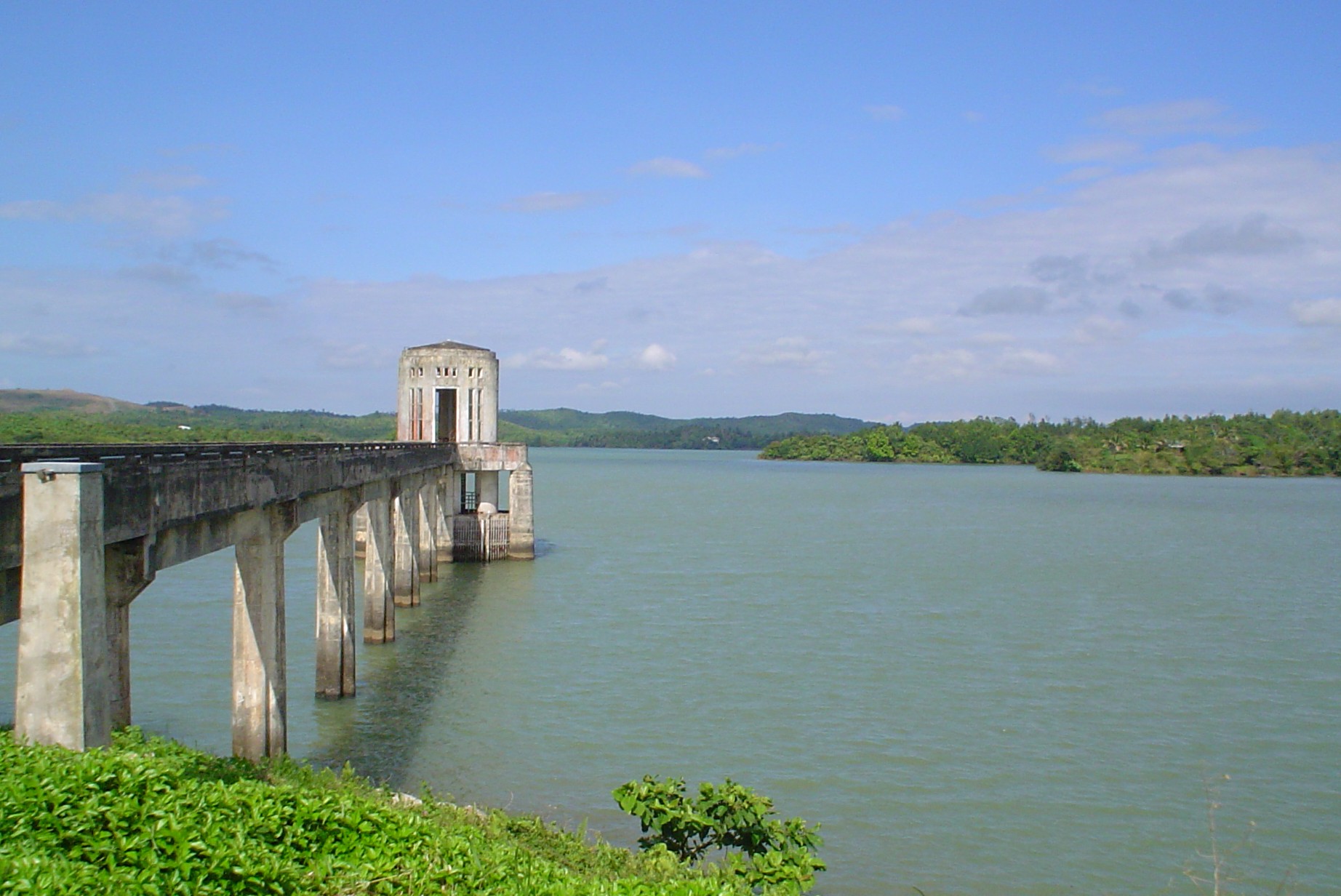
The Caliraya hydropower system has deep roots in the Philippines’ early electrification and infrastructure-building period, dating back to the late 1930s when large public works were still being shaped under American engineering influence. The original Caliraya Hydroelectric Power Plant, commissioned in 1939, was designed under the direction of Hugh J. Casey of the US Army Corps of Engineers, who was dispatched to the Philippines to advise on flood control and power development during the Commonwealth era.
His plan created Lake Caliraya through an embankment dam and established one of Southeast Asia’s earliest large-scale hydropower facilities, supplying electricity to Manila and surrounding provinces. Construction of the dam was carried out by Pedro A. Siochi and Company, led by Filipino architect-engineer Pedro Angeles Siochi, whose firm also built many of the Philippines’ most enduring American-era civic structures, including the Manila Central Post Office, the Legislative Building, and the Metropolitan Theater.
In the decades that followed, Caliraya was absorbed into the Philippine National Power Corp. (NPC) system and expanded with the Botocan facility and, later, the Kalayaan pumped-storage plants—turning a pre-war hydropower project into a modern, grid-balancing asset that continues to shape the country’s energy system today. Today, 40% of the NPC is controlled by China’s State Grid Corporation of China (SGCC) as a technical partner under a concession agreement.
For the government, the CBK turnover is being framed as both a fiscal and strategic win, helping retire state liabilities while placing a critical clean energy asset in the hands of operators with the capital and expertise to modernize it. For the power system, however, the implications are larger.
As Luzon faces tighter reserve margins, rising electricity demand, and a growing share of intermittent renewables, assets like CBK will increasingly determine whether the energy transition succeeds without sacrificing reliability. In that sense, the CBK privatization is not just about who owns a hydroelectric plant, but about how the Philippines prepares its grid for a cleaner, more complex energy future.

Support CleanTechnica via Kickstarter

Sign up for CleanTechnica’s Weekly Substack for Zach and Scott’s in-depth analyses and high level summaries, sign up for our daily newsletter, and follow us on Google News!
Have a tip for CleanTechnica? Want to advertise? Want to suggest a guest for our CleanTech Talk podcast? Contact us here.
Sign up for our daily newsletter for 15 new cleantech stories a day. Or sign up for our weekly one on top stories of the week if daily is too frequent.
CleanTechnica uses affiliate links. See our policy here.
CleanTechnica’s Comment Policy