
The Year Electrification Took Over The Philippine International Motor Show (Part 2)


Part 2: The Legacy Response. See Part 1 here.
If the Chinese manufacturers represented the disruption phase of the industry’s transformation, the second major story at PIMS 2026 was scalability. Electrification is no longer confined to passenger vehicles. Increasingly, manufacturers are targeting the fleets, logistics operators, and transport providers that account for a disproportionate share of fuel consumption, operating costs, and emissions.
This shift was most visible in the commercial vehicle sector.
Foton Philippines arrived with one of the most comprehensive commercial electrification displays at the show. Anchoring the lineup was the eAUMAN electric tractor head, supported by the Traveller Sierra EV and the TransVan EV. While consumer EV adoption often progresses gradually, commercial fleets operate under a different set of economic realities. Vehicles that spend long hours on the road can recover the higher upfront cost of electrification more quickly through reduced fuel and maintenance expenses. Foton’s display reflected a growing industry recognition that the fastest gains in emissions reduction may come from fleet operators rather than private motorists.

BAIC Philippines approached the challenge from another angle. Its B30e Dune hybrid off-roader, B40e Trailmaster range-extended electric vehicle, and B60e Beaumont range-extended SUV sought to address one of the country’s most persistent concerns: range anxiety. By using internal combustion engines as generators rather than primary propulsion systems, range-extender technology offers a compromise between electric driving characteristics and long-distance flexibility. For a country still developing its charging network, the concept may prove particularly relevant for motorists who regularly travel between urban centers and provincial destinations.
The response from the industry’s traditional leaders was more measured but no less significant. Rather than embracing a single technology pathway, Japanese and Korean manufacturers presented a diverse portfolio of hybrids, plug-in hybrids, battery-electric vehicles, and conventional powertrains. Their message was clear: the transition will happen, but it will not happen the same way for every consumer or every market.
Perhaps the most consequential display belonged to Toyota Motor Philippines. Regardless of how quickly new entrants expand, the pace of electrification in the Philippines will ultimately be influenced by how aggressively Toyota guides its enormous customer base toward alternative powertrains.

Toyota’s display embodied the company’s multi-pathway philosophy. Leading the presentation was the Land Cruiser 300 Hybrid, pairing a twin-turbocharged 3.5-liter V6 engine with electric assistance to deliver a combined 457 horsepower and 790 Nm of torque. Nearby stood the Hilux Battery Electric Vehicle concept, an indication that Toyota is actively exploring the electrification of one of the country’s most important commercial vehicle platforms. The dedicated battery-electric bZ4X crossover added a pure EV option to the display, while the internal-combustion Land Cruiser FJ served as a reminder that Toyota remains committed to offering multiple solutions as market conditions evolve.
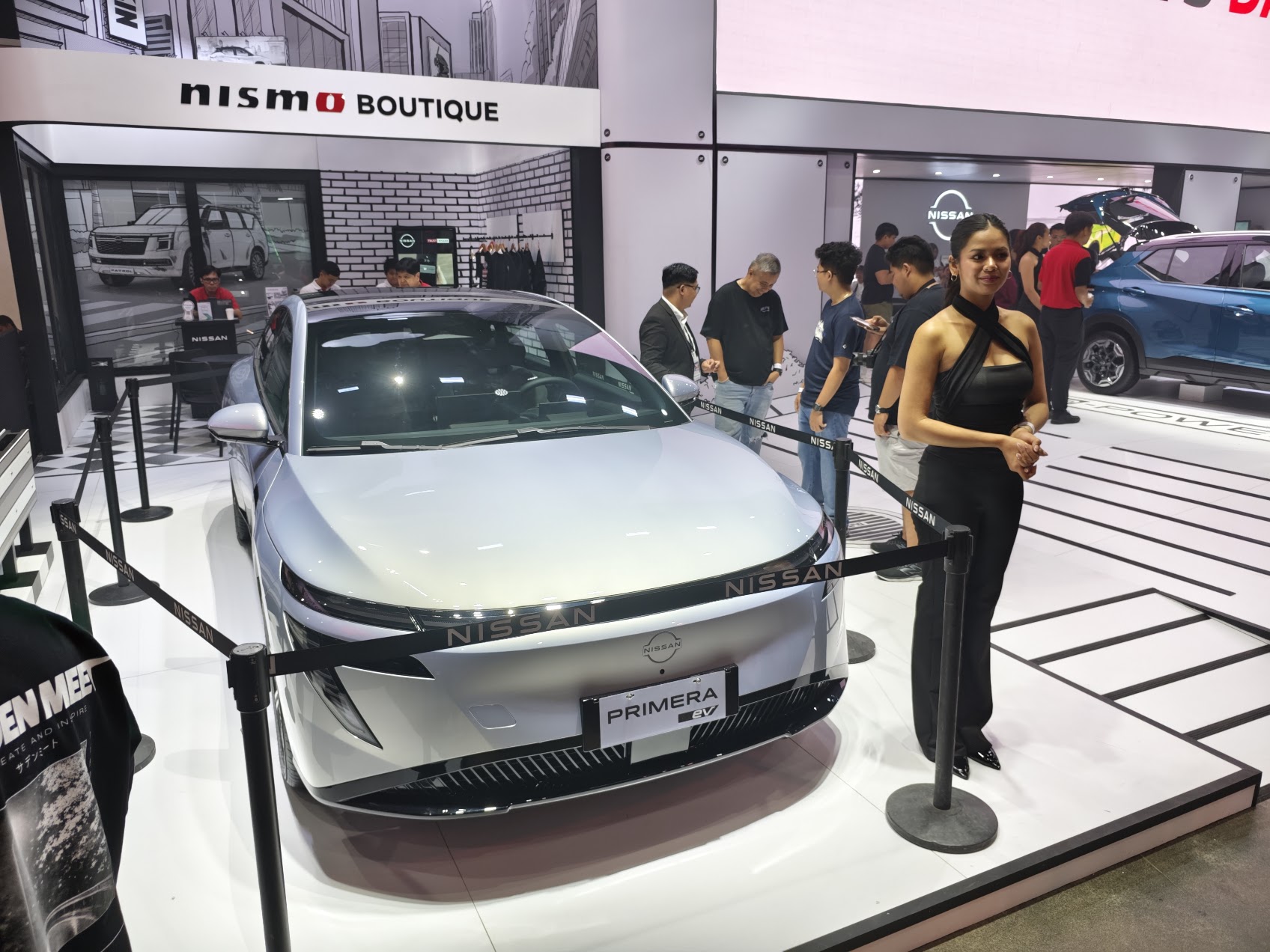
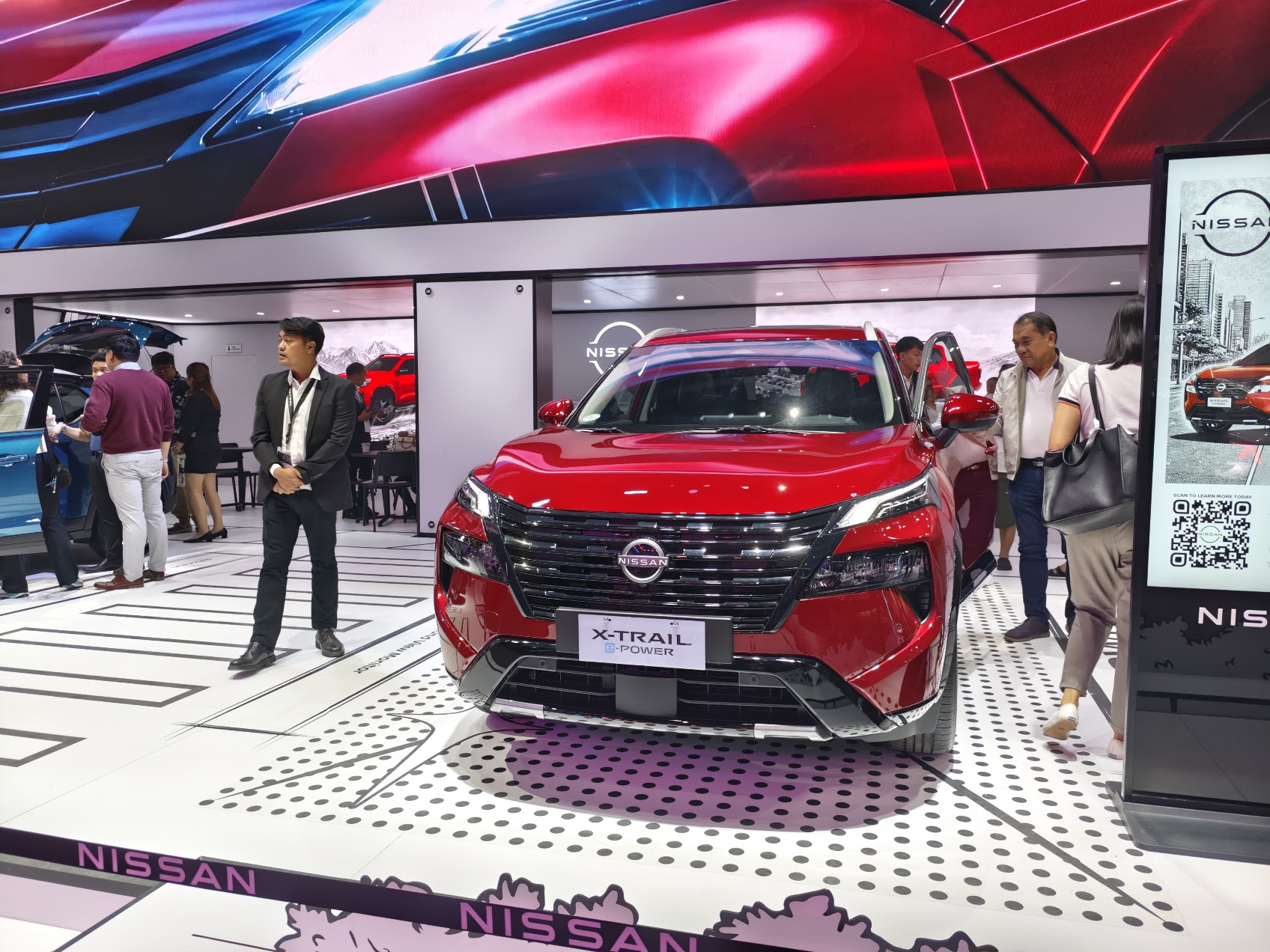
Nissan Philippines utilized its partnership with Dongfeng-Nissan to broaden its electrified portfolio. The Frontier Pro Plug-in Hybrid Electric Vehicle and Primera EV demonstrate how the company intends to supplement its established e-Power lineup with new battery-electric and plug-in hybrid offerings. At the same time, the X-Trail e-Power and Kicks e-Power continue to provide a solution that appeals to consumers seeking electrified driving characteristics without dependence on charging infrastructure.

Suzuki Philippines marked a significant milestone with the unveiling of the e-Vitara. Developed on a dedicated electric vehicle platform, the compact SUV is the company’s first global battery-electric model. For a manufacturer historically associated with affordable internal combustion vehicles, the e-Vitara represents a strategic shift that would have seemed unlikely only a few years ago. Its arrival signals Suzuki’s recognition that even value-oriented brands must now establish a presence in the EV market.
Subaru pursued a more conservative evolution. The Crosstrek e-Boxer Hybrid integrates electric assistance into the company’s established boxer engine and Symmetrical All-Wheel Drive architecture. Rather than reinventing its identity, Subaru is attempting to improve efficiency while preserving the characteristics that have traditionally defined the brand. The simultaneous introduction of the WRX tS Wagon reinforced that balancing act between electrification and enthusiast appeal.
Mitsubishi Motors Philippines concentrated on plug-in hybrid technology through the upcoming Outlander PHEV. Expected to arrive later this year, the SUV combines a 2.4-liter gasoline engine with twin electric motors and a high-capacity battery pack. The formula reflects Mitsubishi’s belief that plug-in hybrids remain particularly relevant in markets where charging infrastructure is still developing. The introduction of a new X-Force variant alongside the Outlander PHEV further emphasized the company’s commitment to maintaining both conventional and electrified offerings.
Not every manufacturer appeared convinced that the transition must happen immediately.
Isuzu Philippines chose to focus squarely on its traditional strengths. Despite expectations that the D-Max EV seen at international exhibitions might make an appearance, the company instead unveiled a refreshed version of its diesel-powered D-Max pickup. Enhanced styling, safety features, and technology upgrades took center stage. The decision reflects a belief that many commercial users and fleet operators remain committed to diesel power, at least in the near term.

Kia Philippines occupied the middle ground. The EV9 and EV6 highlighted the company’s investment in dedicated battery-electric platforms, while the Sorento Turbo Hybrid and Carnival Turbo Hybrid acknowledged the practical realities of the local market. By offering both pure electric and hybrid solutions, Kia demonstrated the flexibility increasingly required of manufacturers navigating markets at different stages of electrification.
What emerged from PIMS 2026 was not a consensus around a single technology. Instead, the exhibition revealed an industry pursuing multiple pathways simultaneously. Battery-electric vehicles, plug-in hybrids, serial hybrids, range-extenders, and advanced conventional hybrids shared the same floor because manufacturers themselves recognize that the Philippine market remains uniquely complex.
The future of mobility in the country will not be defined by a single drivetrain. It will be shaped by a competition among technologies, business models, and ownership structures, each attempting to solve different challenges related to infrastructure, affordability, and consumer behavior. What PIMS 2026 ultimately demonstrated is that the transition is no longer theoretical. The contest for market leadership in an electrified future has already begun.